
Tax season can be stressful for business owners, freelancers, contractors, and entrepreneurs. One of the most common reasons people overpay taxes or struggle during an IRS audit is poor receipt organization.
Business receipts serve as proof of your expenses and deductions. Without proper documentation, you may lose valuable tax deductions that could significantly reduce your taxable income. Whether you run a small business, operate as a sole proprietor, manage an LLC, or work as an independent contractor, organizing your receipts properly is essential for accurate bookkeeping and tax compliance.
The good news is that receipt management does not have to be complicated. With the right system, you can save time, reduce stress, maximize deductions, and prepare for tax season with confidence.
In this comprehensive guide, you’ll learn exactly how to organize business receipts for taxes, what receipts to keep, how long to keep them, digital storage best practices, IRS requirements, and common mistakes to avoid.
Why Organizing Business Receipts Matters
Many business owners treat receipt management as an afterthought. Unfortunately, this can lead to serious financial consequences.
Proper receipt organization helps you:
- Claim legitimate tax deductions
- Reduce taxable income
- Prepare accurate financial statements
- Simplify bookkeeping
- Support deductions during an IRS audit
- Monitor business spending
- Improve cash flow management
- Save time during tax preparation
A missing receipt may seem insignificant, but hundreds of missing receipts throughout the year can cost your business thousands of dollars in lost deductions.
What Counts as a Business Receipt?
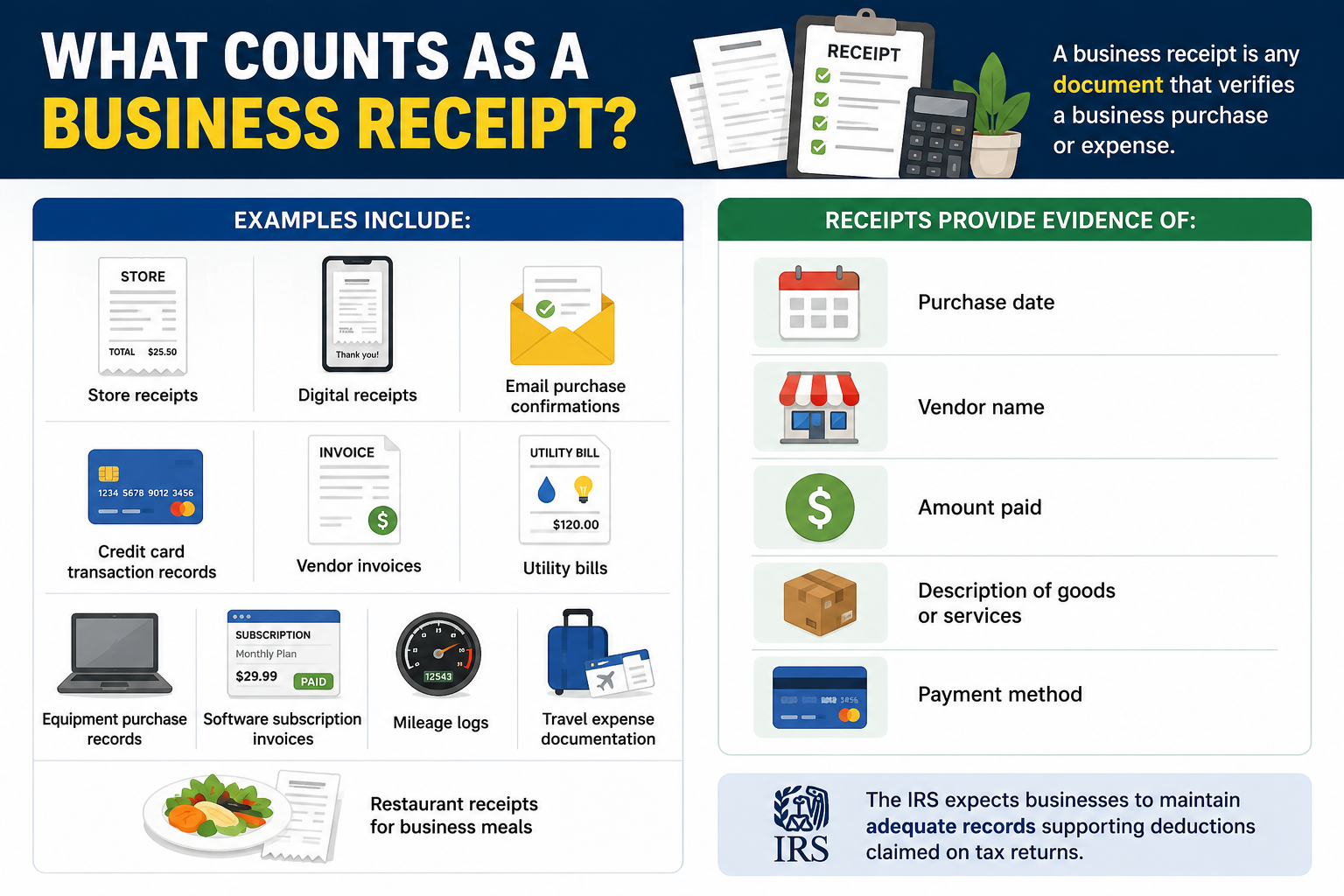
A business receipt is any document that verifies a business purchase or expense.
Examples include:
- Store receipts
- Digital receipts
- Email purchase confirmations
- Credit card transaction records
- Vendor invoices
- Utility bills
- Equipment purchase records
- Software subscription invoices
- Mileage logs
- Travel expense documentation
- Restaurant receipts for business meals
Receipts provide evidence of:
- Purchase date
- Vendor name
- Amount paid
- Description of goods or services
- Payment method
The IRS expects businesses to maintain adequate records supporting deductions claimed on tax returns.
Types of Business Receipts You Should Keep
Office Supplies
Keep receipts for:
- Paper
- Pens
- Printer ink
- Notebooks
- Filing supplies
- Desk accessories
These expenses are generally deductible business expenses.
Equipment Purchases
Save receipts for:
- Computers
- Laptops
- Monitors
- Printers
- Machinery
- Business tools
Large purchases may need to be depreciated over time rather than deducted immediately.
Vehicle Expenses
Business-related vehicle expenses often require detailed documentation.
Keep records of:
- Fuel purchases
- Repairs
- Maintenance
- Parking fees
- Tolls
- Vehicle lease payments
If using the standard mileage method, maintain a mileage log documenting business travel.
Travel Expenses
Business travel receipts should include:
- Airfare
- Hotels
- Rental cars
- Ride-sharing services
- Parking
- Business-related transportation
Keep documentation showing the business purpose of each trip.
Meals and Entertainment
Business meal expenses may qualify for deductions under IRS guidelines.
Retain receipts showing:
- Restaurant name
- Date
- Amount spent
- Attendees
- Business purpose
Documenting the reason for the meeting is just as important as keeping the receipt.
Home Office Expenses
If eligible for a home office deduction, keep records for:
- Internet service
- Utilities
- Rent
- Mortgage interest
- Property taxes
- Office furniture
Maintain documentation demonstrating that the workspace is used exclusively for business.
Professional Services
Save invoices and receipts from:
- Accountants
- Attorneys
- Consultants
- Marketing agencies
- Freelancers
- Business coaches
These expenses are often fully deductible.
Software and Subscriptions
Modern businesses rely heavily on software.
Keep receipts for:
- Accounting software
- CRM platforms
- Project management tools
- Website hosting
- Cloud storage
- Design software
Subscription costs are typically deductible business expenses.
Paper vs. Digital Receipt Storage
Many business owners wonder whether they should keep paper receipts or switch to digital storage.
The answer is simple:
Digital storage is usually the better option.
Benefits include:
- Easy searching
- Reduced clutter
- Faster tax preparation
- Improved security
- Backup protection
- Easier sharing with accountants
The IRS generally accepts digital copies provided they are accurate, readable, and accessible.
Step-by-Step Process for Organizing Business Receipts
Step 1: Collect Every Receipt Immediately
Develop the habit of saving receipts as soon as transactions occur.
Instead of stuffing receipts into your wallet or vehicle, immediately:
- Take a photo
- Scan the receipt
- Upload it to a storage system
This prevents loss and reduces year-end stress.
Step 2: Separate Personal and Business Expenses
One of the biggest mistakes small business owners make is mixing personal and business spending.
Use:
- Separate bank accounts
- Separate credit cards
- Dedicated business payment methods
This creates cleaner financial records and simplifies tax preparation.
Step 3: Create Expense Categories
Organize receipts into categories such as:
- Advertising
- Travel
- Office supplies
- Equipment
- Utilities
- Insurance
- Professional services
- Vehicle expenses
- Software subscriptions
Consistent categorization improves bookkeeping accuracy.
Step 4: Use Cloud Storage
Cloud storage provides secure access from anywhere.
Create folders by:
Year → Month → Expense Category
Example:
2026
- January
- Travel
- Office Supplies
- Marketing
- February
- Travel
- Equipment
- Utilities
This structure makes locating documents easy.
Step 5: Name Files Consistently
Use a standard naming convention.
Example:
2026-03-15_OfficeDepot_OfficeSupplies_$85
Benefits include:
- Faster searching
- Better organization
- Easier audits
Step 6: Reconcile Monthly
Do not wait until tax season.
Every month:
- Compare receipts with bank statements
- Verify expenses
- Categorize transactions
- Identify missing receipts
Monthly reviews prevent bookkeeping errors from accumulating.
Best Receipt Organization Methods
Method 1: Envelope System
For paper receipts, use labeled envelopes.
Examples:
- Travel
- Meals
- Equipment
- Utilities
While simple, this method becomes difficult as businesses grow.
Method 2: Filing Cabinet System
Traditional filing systems remain useful for businesses that receive paper invoices.
Use folders organized by:
- Year
- Expense type
- Vendor
Method 3: Spreadsheet Tracking
Many small businesses use spreadsheets.
Track:
- Date
- Vendor
- Category
- Amount
- Tax deductible status
Spreadsheets offer flexibility but require manual maintenance.
Method 4: Accounting Software
Accounting software automates receipt organization.
Benefits include:
- Automatic categorization
- Expense tracking
- Receipt attachments
- Tax reporting
- Audit trails
This is often the most efficient option for growing businesses.
How Long Should You Keep Business Receipts?
The IRS generally recommends keeping tax records for at least three years.
However, some situations require longer retention.
Common guidelines include:
Three Years
Keep records for:
- Tax returns
- Supporting receipts
- Expense documentation
Six Years
Keep records if:
- Income was substantially underreported
Seven Years
Keep records related to:
- Bad debt deductions
- Worthless securities
Indefinitely
Keep records for:
- Property purchases
- Asset basis calculations
- Corporate formation documents
When in doubt, keeping digital copies longer is often wise.
IRS Requirements for Receipt Documentation
The IRS expects documentation showing:
- Amount spent
- Date incurred
- Vendor information
- Business purpose
For some expenses, additional documentation may be necessary.
The more detailed your records, the stronger your position during an audit.
Common Receipt Organization Mistakes
Waiting Until Tax Season
Trying to organize an entire year’s worth of receipts in March or April creates unnecessary stress.
Maintain records throughout the year.
Losing Small Receipts
Small purchases add up.
Even minor expenses may contribute significantly to annual deductions.
Not Backing Up Digital Files
Always maintain backups.
Use:
- Cloud storage
- External hard drives
- Automatic backups
Redundancy protects important records.
Mixing Business and Personal Purchases
Separate accounts simplify:
- Bookkeeping
- Tax filing
- Financial reporting
This is one of the most important business practices.
Throwing Away Receipts Too Soon
Always verify retention requirements before deleting records.
Digital storage makes long-term retention easy and inexpensive.
Receipt Organization for Freelancers and Independent Contractors
Freelancers often overlook receipt management because they do not consider themselves traditional businesses.
However, freelancers can deduct many expenses, including:
- Internet service
- Office supplies
- Software subscriptions
- Education and training
- Marketing expenses
- Home office expenses
Maintaining organized records helps maximize deductions while remaining compliant with tax regulations.
Receipt Organization for LLCs
LLCs should maintain clear separation between personal and business finances.
Best practices include:
- Dedicated business bank account
- Business credit card
- Digital receipt storage
- Monthly reconciliations
Proper recordkeeping supports liability protection and tax compliance.
Receipt Organization for E-Commerce Businesses
Online sellers generate numerous digital transactions.
Keep records for:
- Inventory purchases
- Shipping costs
- Platform fees
- Advertising expenses
- Packaging materials
Digital organization systems are particularly important for e-commerce operations.
Creating a Receipt Management Workflow
An effective workflow might look like this:
- Make purchase
- Capture receipt immediately
- Upload to storage system
- Categorize expense
- Reconcile monthly
- Review quarterly
- Prepare tax reports annually
Following a consistent process eliminates year-end chaos.
Benefits of Digital Receipt Management
Businesses increasingly adopt paperless systems because they offer:
- Better organization
- Faster retrieval
- Lower storage costs
- Reduced risk of loss
- Improved collaboration with accountants
- Simplified audits
Digital records can be searched within seconds, saving valuable time.
Tax Audit Preparation Tips
Organized receipts are your first line of defense during an audit.
Prepare by:
- Keeping complete records
- Maintaining digital backups
- Categorizing expenses consistently
- Recording business purposes
- Reconciling accounts regularly
Strong documentation demonstrates professionalism and credibility.
Year-End Receipt Checklist
Before filing taxes, verify that you have:
✓ Office supply receipts
✓ Equipment purchase records
✓ Travel documentation
✓ Vehicle expense records
✓ Software subscription invoices
✓ Professional service invoices
✓ Home office records
✓ Utility bills
✓ Bank statements
✓ Credit card statements
✓ Mileage logs
✓ Business meal receipts
Completing this checklist reduces the likelihood of missed deductions.
Final Thoughts
Organizing business receipts for taxes is not just about compliance—it’s about protecting your profits. Every receipt represents a potential tax deduction that could lower your tax bill and improve your business’s financial health.
The most successful business owners create a receipt management system that works year-round rather than scrambling during tax season. Whether you choose paper files, spreadsheets, cloud storage, or accounting software, consistency is the key to success.
Start building good habits today. Capture receipts immediately, categorize expenses regularly, maintain backups, and review records monthly. These simple practices can save countless hours, reduce stress, and help you maximize legitimate tax deductions.
By implementing the strategies outlined in this guide, you’ll be better prepared for tax season, more confident in your financial records, and ready to handle any documentation requests that may arise.
